Karlapat in Line of BHP Billiton Fire
After Niyamgiri, another biodiversity rich, hydrologically critical "mali" is targeted for bauxite mining. Read on:
Greens see red over proposed mining near Karlapat sanctuary
Pioneer News Service Bhubaneswar
The move by BHP-Billiton, world's largest mining conglomerate, to obtain a mining lease close to the Karalapat Wildlife Sanctuary in Kalahandi district has triggered a fresh environmental row.
The controversy started on Tuesday when the company moved the District Collector of Kalahandi with a mining lease application. The Collector referred the application to the DFO Kalahandi for his opinion.
The company in its application asked for allotment of mining lease area in the Khandualmali hill to extract rich bauxite deposits of the region. However, the biggest hindrance for the company in acquiring the mining lease as per its demarcated sketch is Karlapat Wildlife Sanctuary. A portion of the sanctuary comes under the proposed mining area.
The Wildlife Society of Orissa (WSO) on Tuesday alleged that the Orissa Government has been under pressure from BHP-Billiton to denotify a portion of the Karlapat Wildlife Sanctuary and redraw its boundaries keeping in mind the rich bauxite deposits of the adjacent Khandualmalli hill. Secretary of the WSO Biswajeet Mohanty, speaking to The Pioneer said, the company wants the State Government to push back the boundary by a few kilometres to overcome the legal hurdles in getting environmental clearances for operating these mines.
If the company succeeds, it would be the first such case in Orissa where a notified wildlife sanctuary's boundary has been redrawn to help a mining company, Mr Mohanty said.
The proximity of the Karlapat Wildlife Sanctuary to the mines is posing a legal impediment to the plans of BHP-Billiton as the borders of the sanctuary are within three km from the bauxite reserves.
The Environment Protection Act, 1986, treats an area of up to 10 km from the border of any sanctuary or National Park as "eco-sensitive" where no developmental or industrial activities are permitted. This rule was reiterated in the National Wildlife Strategy, 2002, which was approved by the then Prime Minister, Atal Bihari Vajpayee. The Supreme Court has also endorsed in several cases concerning mining near sanctuaries and National Parks that no mining or industries should be permitted within 10 km.
The Central Empowered Committee of the Supreme Court, during its visit in December, 2004, in case of Vedanta Alumina, had also held that the Karlapat mines are too close to the sanctuary and are part of the proposed south Orissa elephant reserve. The State Government in its affidavit had stated that no mining activities would be allowed in this region of Khandualmalli hill.
The Kalrapat Sanctuary with an area of 175 sq km was notified in 1992 and at present is the only wildlife sanctuary in Kalahandi. It is a water rich area and is home to several species including leopards, tigers, elephants, black panthers, deer, sambhar and several varieties of birds. It is also rich in floral wealth and is a habitat for more than 25 types of orchids.
The WSO said BHP-Billiton has a notorious environmental track record since it caused a gigantic environmental disaster at Papua New Guinea at Ok Tedi copper mining project. The Australian company dumped 80,000 tonnes of tailings containing copper, zinc, cadmium and lead into the fly and Ok Tedi Rivers everyday for two decades, which devastated the local wildlife and fish.
The watershed of Khandualmali hills drains towards the Karlapat Wildlife Sanctuary and more than 35 streams originate from the hilltop. Water from this hill feeds Tel river. The WSO apprehends that mining of bauxite would destroy the rich water source and lead to a total collapse of the ecosystem of the adjacent Karlapat Sanctuary.
Row recipe
* Mining conglomerate BHP-Billiton applies for lease area in the Khandualmali hill to extract rich bauxite deposits of the region.
* The proximity of the Karlapat wildlife sanctuary to the mines becomes a legal impediment to the company's plans
* Environmentalists allege the company is exerting pressure on the Orissa Government to push back the boundary by a few kilometres
* Wildlife Society of Orissa opposes the move fearing a total collapse of the ecosystem of the sanctuary
* According to WSO secretary, if the company succeeds, it would be the first such case in Orissa where a wildlife sanctuary's boundary has been redrawn to help a mining company.
Showing posts with label Bauxite. Show all posts
Showing posts with label Bauxite. Show all posts
Thursday, November 10, 2005


Thursday, November 03, 2005
Bauxite deposits in South Orissa
India has 8% of the bauxite deposits in the world, out of which 75% deposits are in Orissa.The major bauxite deposits are located in the Schedule V areas in Kalahandi, Rayagada and Koraput districts with the only largescale mining being done by NALCO on Panchapatamali of Koraput district. The bauxite deposits which are of very good quality have attracted multinationals like Vedanta, BHP Billiton as well as Indian Corporates such as Hindalco for mining, fefing of alumina and for smelting aluminium. At least three alumina refineries based on bauxite mining are planned in South Orissa at present including Vedanta's alumina refinery at Lanjigarh, the controversial UAIL mining and alumina refinery in Kashipur and the Aditya Aluminium plant somewhere near Kodinga Mali.
These mining and refinery projects have been a major source of controversy, with the local tribals opposing proposed mining projects tooth and nail, and the State Government using all possible strategies, including coercion and repression to make these deposits available to mining multinationals. The resistance of Kashipur tribals against UAIL’s mining project and alumina refinery has been going on for over 10 years now. Similarily, flashpoints are building up near proposed bauxite mining on Niyamgiri by Vedanta, Sunger by L&T, Kodingamali by Aditya Aluminium and Maliparbat by Hindalco. The bauxite deposits are all located on top of the highest mountains in South Orissa which are called Malis, and are sacred to tribals as they are source of large number of perennial streams. These streams are vital to local tribals as they are often the only source of water for drinking and irrigation of fields in summer season, and sustain the local agricultural economy. This realization has created massive resistance against bauxite mining amongst tribals. The major bauxite deposits of Orissa are given as below: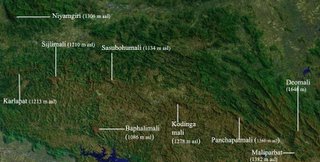
India has 8% of the bauxite deposits in the world, out of which 75% deposits are in Orissa.The major bauxite deposits are located in the Schedule V areas in Kalahandi, Rayagada and Koraput districts with the only largescale mining being done by NALCO on Panchapatamali of Koraput district. The bauxite deposits which are of very good quality have attracted multinationals like Vedanta, BHP Billiton as well as Indian Corporates such as Hindalco for mining, fefing of alumina and for smelting aluminium. At least three alumina refineries based on bauxite mining are planned in South Orissa at present including Vedanta's alumina refinery at Lanjigarh, the controversial UAIL mining and alumina refinery in Kashipur and the Aditya Aluminium plant somewhere near Kodinga Mali.
These mining and refinery projects have been a major source of controversy, with the local tribals opposing proposed mining projects tooth and nail, and the State Government using all possible strategies, including coercion and repression to make these deposits available to mining multinationals. The resistance of Kashipur tribals against UAIL’s mining project and alumina refinery has been going on for over 10 years now. Similarily, flashpoints are building up near proposed bauxite mining on Niyamgiri by Vedanta, Sunger by L&T, Kodingamali by Aditya Aluminium and Maliparbat by Hindalco. The bauxite deposits are all located on top of the highest mountains in South Orissa which are called Malis, and are sacred to tribals as they are source of large number of perennial streams. These streams are vital to local tribals as they are often the only source of water for drinking and irrigation of fields in summer season, and sustain the local agricultural economy. This realization has created massive resistance against bauxite mining amongst tribals. The major bauxite deposits of Orissa are given as below:

Subscribe to:
Posts (Atom)